The drum is a member of the percussiongroup of musical instruments. In the Hornbostel-Sachs classification system, it is a membranophone.[1] Drums consist of at least one membrane, called a drumhead or drum skin, that is stretched over a shell and struck, either directly with the player’s hands, or with a percussion mallet, to produce sound. There is usually a resonance head on the underside of the drum, typically tuned to a slightly lower pitch than the top drumhead. Other techniques have been used to cause drums to make sound, such as the thumb roll. Drums are the world’s oldest and most ubiquitous musical instruments, and the basic design has remained virtually unchanged for thousands of years.[1]
History of flute

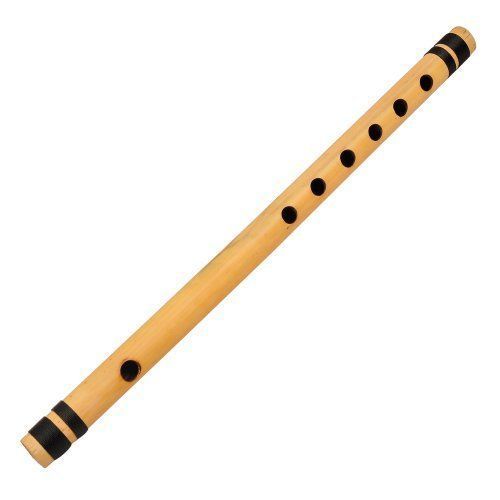
The flute is one of the oldest musical instruments of all and is regarded as the first ever wind instrument. It has been in use at least since the Stone Age.

Flute playing has a particularly long tradition in the Orient. The Sumerians and Egyptians were among the first to add three or four finger-holes to their bamboo flutes, which enabled them to produce several notes.

The Ancient Greeks also had quite sophisticated flutes, which were blown at the open upper end and had six finger-holes. However, the flute was regarded as an instrument of the common man and as such was held in scant regard. In contrast, the aulos , a distant precursor of the oboe, was always associated with high social standing

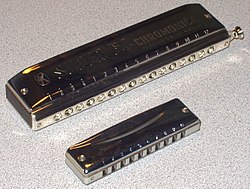
harmonica-air instrument

The harmonica, also known as a French harp or mouth organ, is a free reedwind instrument used worldwide in many musical genres, notably in blues, American folk music, classical music, jazz, country, rock. There are many types of harmonica, including diatonic, chromatic, tremolo, octave, orchestral, and bass versions. A harmonica is played by using the mouth (lips and tongue) to direct air into or out of one or more holes along a mouthpiece. Behind each hole is a chamber containing at least one reed. A harmonica reed is a flat elongated spring typically made of brass, stainless steel, or bronze, which is secured at one end over a slot that serves as an airway. When the free end is made to vibrate by the player’s air, it alternately blocks and unblocks the airway to produce sound.

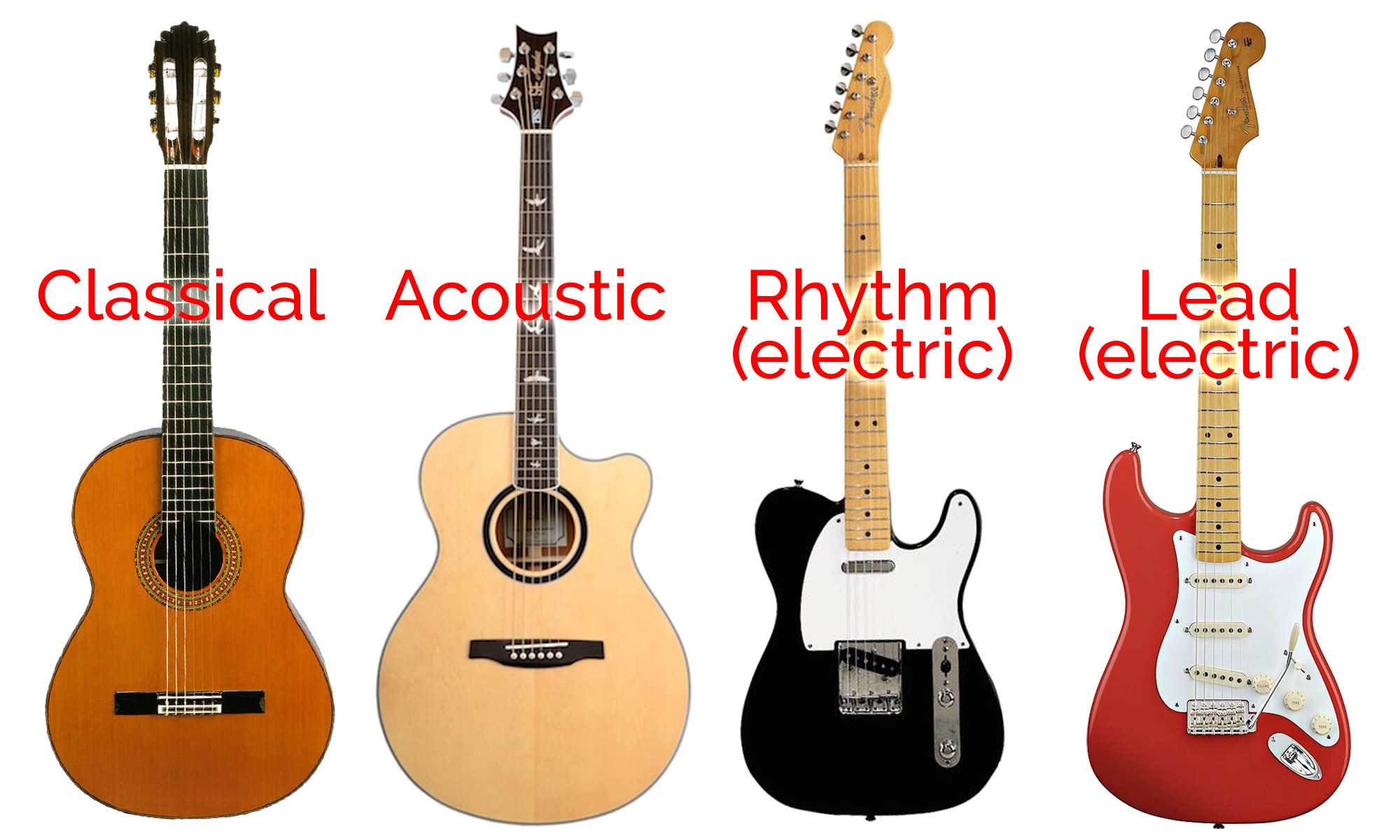
types of guitars

history of violin

Instruments like the violin that use a bow to produce a sound are called bowed stringed instruments. The Arabian rabab and the rebec, which came from the orient in the middle ages and was played widely in Spain and France in the fifteenth century, are said to be the ancestors of the violin. Near the end of the middle ages, a bowed stringed instrument called a fiddle appeared in Europe.
In the East, the Chinese erhu and morin khur evolved from the rabab, and so they are relatives of the violin.